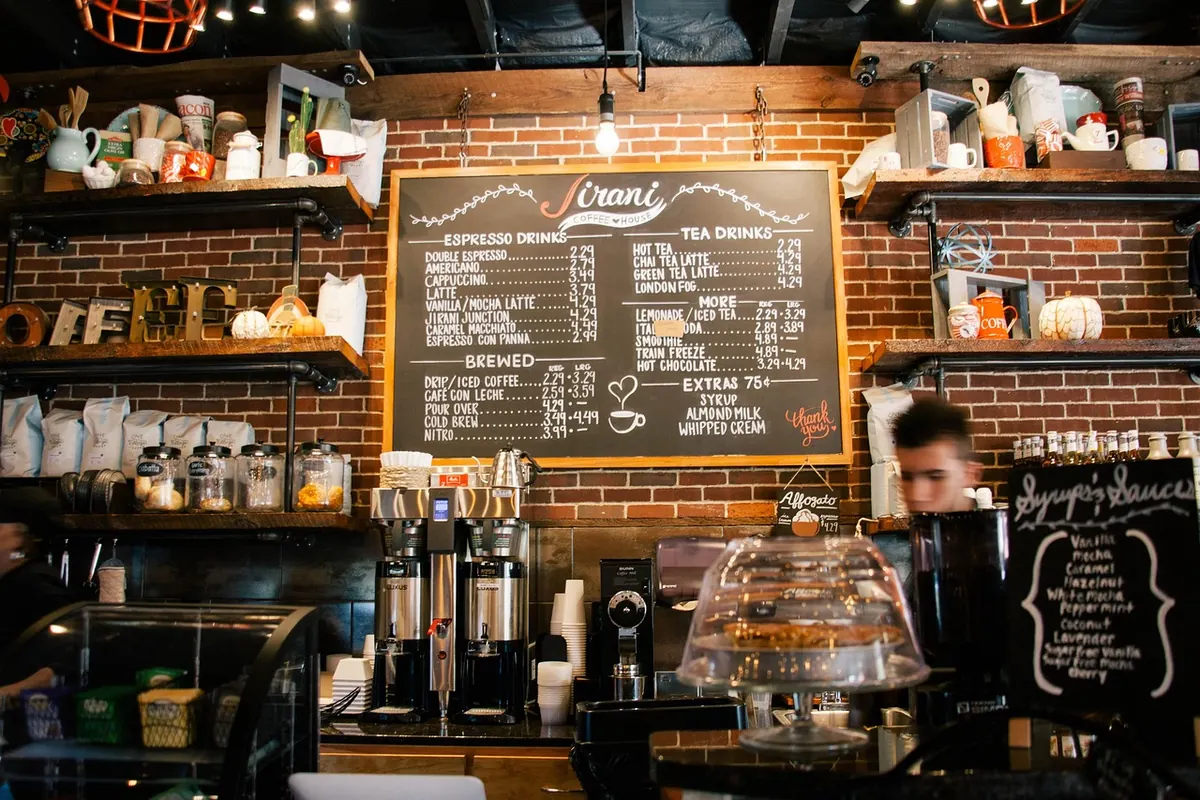
Liverpool's independent coffee scene has grown up. Where Bold Street once had a couple of places worth sitting in, it now has a cluster you could spend an afternoon working through, and the same is true along Lark Lane, down Smithdown Road and across the Baltic Triangle. For anyone used to ordering a large latte in a chain, walking into a small roastery with three different beans chalked on a board can feel like sitting an exam you didn't revise for. It isn't. Know what's on the menu, order at the right moment, and turn up when the room isn't full, and you'll fit right in.
Know Your Menus Before You Reach the Counter
Most independent menus split into two halves: espresso drinks and filter. On the espresso side, the differences are mostly about milk and size. An espresso is the base. A macchiato is that with a spoonful of foam. A cortado is a small, roughly equal mix of espresso and warm milk, and it's the order to choose if you want to taste the coffee without much dilution. A flat white is bigger, with thin, glossy microfoam and a coffee-forward flavour. A cappuccino has more air and foam, and often a dusting of chocolate. A latte is the softest and largest of the lot.
The filter side is where beginners hesitate, so here's the short version. Batch brew is made in advance in a big brewer, served in seconds and usually the cheapest coffee on the board. A pour-over, V60 or Aeropress is made to order, takes several minutes and costs a little more, but it's how you get the clearest taste of a single-origin bean. Cold brew and iced filter appear on warmer days.
The one question worth asking
If the board is a wall of unfamiliar names, say so. Staff at independents are usually the ones choosing the beans and dialling in the grinder, and they would rather answer one question than watch you guess. Try: "I normally drink flat whites — what would you suggest today?" It's a normal thing to ask, not a rookie mistake.
How Ordering Usually Works
Small independents rarely run full table service, but a few do, so check before you commit to a seat. If there's a till near the door, you're almost certainly ordering there.
- Read the board before you join the queue. Decide your drink and whether you want food. Ordering in stages at a busy counter slows everything down.
- Say if you're staying in or taking away. A quick "have here, please" tells them whether to reach for ceramic or paper, and cuts waste.
- Order food at the same time. Kitchens and counter staff work off one ticket, and toasties or pastries often take longer than the coffee.
- Give your name if asked. It's the simplest way for a barista to find you in a room of strangers.
- Step to the end of the bar. Don't stand where the next person needs to order. Most places call drinks in order, so there's no need to hover.
Card and contactless are standard. Milk alternatives — oat, soy, coconut — are available almost everywhere, sometimes for a small extra charge, and it's fine to ask which they use if you're particular about it.
Etiquette: The Unwritten Rules
- Don't hold a table for people who haven't arrived. During the weekend rush, seats are the scarce resource, not coffee.
- Read the laptop policy. Many places welcome remote workers on weekday mornings but ask you to put the screen away at weekends. If there's no sign, ask.
- Ask before bringing the dog in. Plenty of Liverpool cafés are dog-friendly; not all are, and some only allow dogs downstairs or outside.
- Help yourself to water if you spot a jug or glasses on a side table — but don't treat the counter as a self-service station.
- Return your tray or stack your cups if there's a clearly marked spot for it. It's a small kindness that goes a long way in a two-person operation.
- Tipping isn't expected, but if someone brought your order to the table or looked after you well, leaving the change or a small amount on card is a normal gesture.
Best Times to Go
Weekday mid-morning — roughly between ten and half eleven — is the sweet spot everywhere. The commuter rush has cleared, the lunch trade hasn't started, and you can usually get a table by the window.
Times to avoid: 8am to 9.30am on weekdays, when the queue is people grabbing a flat white on the way to work; 12pm to 2pm, when office lunches and pram-pushing meet head-on; and Saturday between 11am and 2pm, which is when Bold Street, Lark Lane and the Baltic Triangle all hit capacity at once.
Weekends: before 10am you'll walk straight to the counter. After about 3pm things thin out again, though some independents close earlier than you'd expect on a Sunday, so check before you set off.
Match days: on Liverpool and Everton home games, cafés on the routes to and from the stadiums fill up before kick-off and go quiet during the match, then get a second rush at full time. If you want a calm coffee, that quiet ninety minutes is a well-kept secret.
When It's Busy, Have a Plan B
A full café isn't a closed café. Put your name down if there's a list, then use the wait to look at the cakes or ask what's on the second grinder. If the queue is out of the door, walk one street back: most of Liverpool's best independents sit within a few minutes of each other, and the one you've never noticed is often the one with a free table. Ordering takeaway is always an option, but sitting down is the whole point — a good flat white in a paper cup on a windy Bold Street corner is a different drink.
A Simple Plan for Your Next Coffee
Pick a street rather than a specific shop and give yourself an hour. Aim for mid-morning if it's a weekday, or before ten if it's a Saturday. Have one default order ready — a flat white is the safest way to judge a new place — and one backup for when the board tempts you. Ask the staff one question about what they're brewing; it's the fastest way to learn what you actually like. Sit down, don't rush, and if someone brings your drink over, leave the change. Do that a few times and the independent scene stops looking like a test and starts feeling like your local.
Photo: Pexels / Pixabay