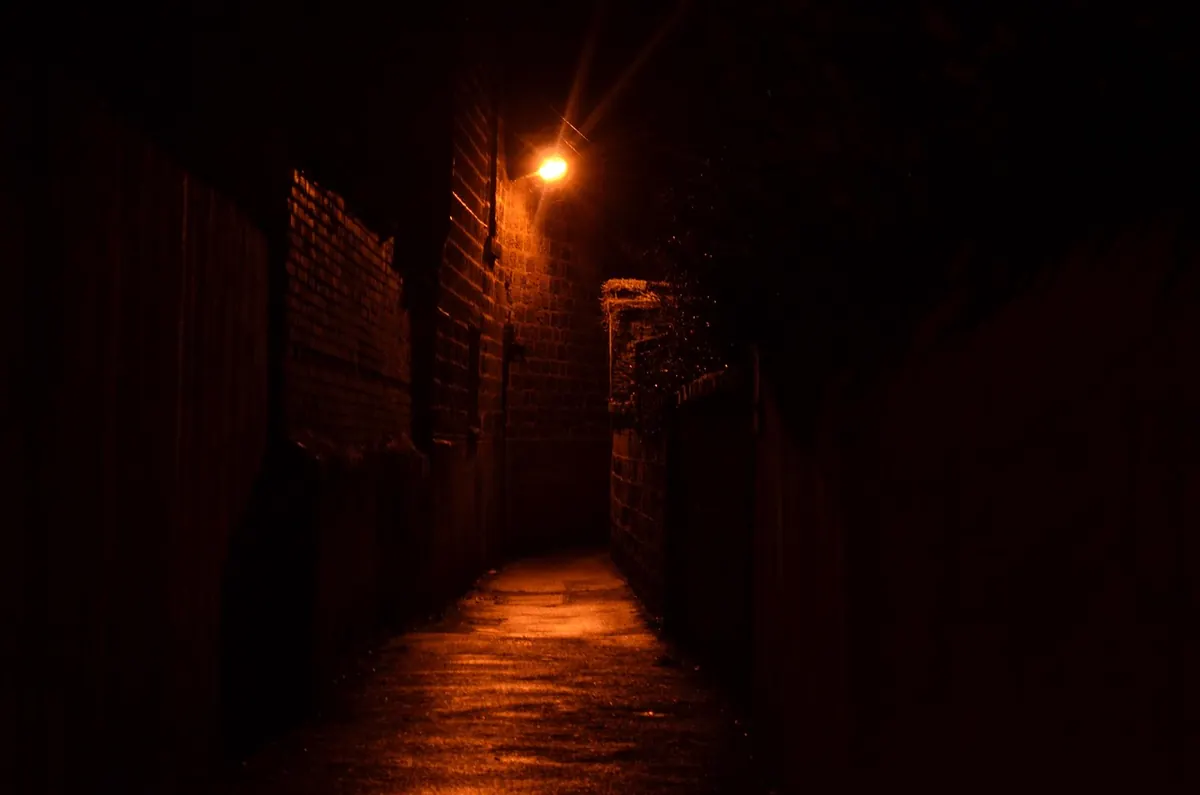
Liverpool has a second street plan. It runs behind the shopfronts on Bold Street, slips between the warehouses of the Ropewalks, and threads through the Georgian terraces above Hope Street. Some of it follows medieval lines; some was cut for rope walks, cart traffic and dock workers. It is one of the best things about the city, and it is also easy to get wrong. Most of the mistakes are small ones, and almost all of them are avoidable with ten minutes of thought before you set off.
Assuming Every Gap Is a Shortcut
A lane that looks like a through-route on a map is often a yard that belongs to a business, a service corridor behind a hotel, or a ginnel that stops at a wall. In the Ropewalks especially, lanes wander between buildings and then simply end. The trick is to read the entrance before you commit to it.
Look for a visible continuation: daylight, a street sign, a stretch of pavement at the far end. If you cannot see through, assume it is private until proven otherwise. Dead ends are not a disaster in daylight with a friend and a plan; they are a much worse idea at half eleven at night. Some gates in the city also lock at dusk, so a lane that runs through in the morning can be sealed by the evening.
Treating Doorways and Windows as Your Backdrop
People live in the flats above those ground floors. Sitting on someone's step to eat your chips, leaning a bike against a door, photographing into a lit window or leaving a coffee cup on a sill all turn a charming lane into somebody else's annoyance. Nobody expects silence in a city centre, but there is a difference between passing through and treating a residential courtyard like a public square.
If you meet a resident, say hello and keep moving. If someone asks you to leave a private yard, leave it. You do not have a right of access, and arguing about it in a narrow space helps nobody. Bins, planters and parked cars are not obstacles to be negotiated; they are signs that the space has a job to do.
Getting the Opening Hours Wrong
Half the frustration on a lane-hunting afternoon comes down to timing rather than direction. Courtyards, churchyards and gardens open and shut on their own schedules, and several are locked in the evening or closed on certain weekdays. Check the sign on the gate rather than a blog post from a few years ago; times shift with the seasons and with staffing.
- Churchyards and gardens: usually open through the day, with gates locked in the evening or at dusk.
- Independent courtyards and cafés: often shut one or two weekdays and can close by late afternoon.
- Markets and indoor arcades: shorter trading days than the surrounding streets; never assume a Sunday.
- Pub passage entrances: the back door may be closed permanently even if the sign still points to it.
- Heritage open days: some lanes and courtyards are only accessible during events, so plan around the date.
If a gate is shut, it is shut. Climbing it, squeezing past it or holding it open for a stream of people is how a genuinely lovely spot ends up closed to everyone.
Forgetting That These Lanes Still Work for a Living
These are not museum corridors. Beer gets delivered, bins get collected, skips get dropped, scaffolding gets shifted. A van reversing into a six-foot gap has very little room and very little patience, and the driver usually cannot see you in a mirror. Step into a doorway, wait, and let them finish. Bin crews and delivery drivers start early, so a quiet lane at two in the afternoon can be a busy one at seven in the morning.
Watch your feet too. Setts and cobbles are uneven, often wet, and sometimes greasy near kitchen doors. Trainers beat heels. Keep to the side where you can, and never stand in the middle of a lane to frame a photograph while a vehicle is waiting.
Switching Off Your Instincts After Dark
Lighting in the older lanes is patchy, and high walls can swallow phone signal entirely. The dock estate has edges that are closer than they look. None of this is a reason to stay in, but it is a reason to think.
Go with someone, stick to lanes you already know once it is properly dark, keep your phone charged, and do not cut through an unlit ginnel to save three minutes on the walk back to the car. If a route feels wrong, turn around. There is no alley in Liverpool worth proving a point over. If you are out late, tell someone where you are heading and roughly when you expect to be back.
Walking With Your Face in Your Phone
Mapping apps are useful for the general shape of a neighbourhood and unreliable on the details of a back lane. Download an offline map before you go, then put the phone away. The things worth seeing are above eye level and easy to miss while you are tracking a blue dot: old warehouse lettering, ghost signs, blue plaques, boot scrapers, coal holes, painted street names and boundary markers.
Ask people. Bar staff, doormen, taxi drivers and shopkeepers know the cut-throughs better than any app, and "does this go through?" takes four seconds to answer. Locals will usually tell you if a lane is worth the detour, and they will definitely tell you if it is not.
A Two-Minute Briefing Before You Go
- Pick one area rather than five. The Ropewalks, the Georgian Quarter and the streets around the Baltic Triangle each fill an afternoon on their own.
- Check gate signs and opening times for the specific courtyards and gardens you want to see.
- Go in daylight first. Learn the shape of the lanes before you use them as an evening route.
- Dress for uneven ground and take a waterproof. The lanes are shadier and wetter than the main streets.
- Keep your voice down, keep your litter with you, and leave the lane exactly as you found it.
- If you are exploring alone, share your route and keep to well-lit, well-used lanes after dark.
The best finds in Liverpool's back lanes are rarely planned: a tiny courtyard with a fig tree, a passage that drops you out somewhere unexpected, a painted sign nobody has bothered to remove. Walk slowly, look up, be decent to the people who live and work there, and the city will keep showing you its quieter side.