Every slot player has heard the phrase "this machine pays 96 percent." It gets tossed around forums, Reddit threads, and Twitch chat like gospel. And technically, that number is real. What most players do with it, however, borders on superstition. Understanding RTP is one of the few pieces of casino knowledge that actually changes how you play, not because it guarantees anything, but because it tells you what kind of game you've walked into before you spend a cent.
What RTP Actually Measures
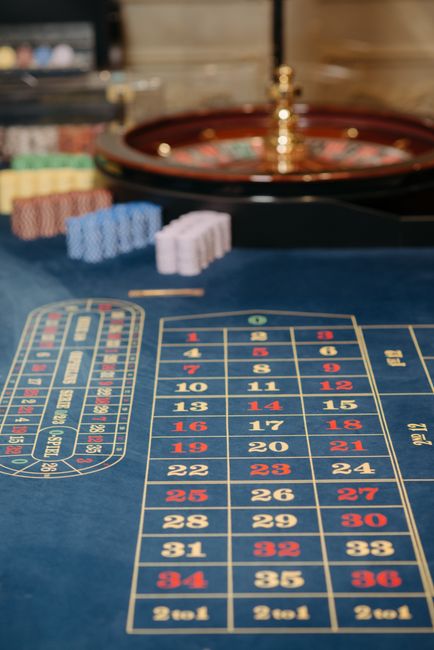
Return to Player is a theoretical calculation: the total amount a slot is expected to pay back to players over millions of spins, expressed as a percentage. A 96% RTP slot returns, on average, 96 units for every 100 wagered. The casino's edge is the remaining 4%. Sounds thin, and compared to something like roulette (5.26% on a double-zero American wheel) or a typical blackjack game under decent rules (0.5% house edge), 4% is genuinely competitive for a casino product.
Here's the part that gets ignored. That 96% is not a promise to you. It's an average over an enormous sample size. On any given session — say 300 spins at a dollar each — you might walk away with $160, or $240, or $1,180. The RTP describes the machine's long-run behavior, not your Tuesday night.
The Volatility Conversation Nobody Has Properly
Two slots can share an identical RTP and play completely differently. This is where volatility comes in. A low-volatility slot like Starburst (around 96.1% RTP) hands out frequent small wins that keep your balance drifting slowly downward. A high-volatility monster like a Megaways title or a Nolimit City release might have similar RTP but can eat 400 spins before paying anything meaningful, then drop a 5,000x hit.
Which is "better"? Neither. The real questions are about you:
- How much bankroll do you have?
- How long do you want to play?
- Can you stomach watching $100 disappear with no feedback?
A player with $40 who wants two hours of entertainment should be on low-volatility games. A player who views a session as a lottery ticket purchase is better suited to high volatility. Matching the game to the bankroll matters far more than chasing the last 1% of RTP.
Where Casinos Hide the Real Numbers
Regulated operators in the UK, Malta, Sweden, and most EU markets are legally required to publish RTP per game, usually by scrolling to the info or paytable screen. This is not decorative. Ignore the lobby listing and always check the individual game. Beware of the same title appearing with different RTPs across operators — many studios ship multiple configurations, sometimes dropping a game from 96.5% to 94% or even 92% at certain casinos.
If a slot doesn't display its RTP anywhere, that's a signal in itself. Legitimate UKGC- or MGA-licensed casinos won't hide it. Offshore sites frequently do.
Betting, Poker, and the Higher-Margin Reality
Slots are the biggest earner for casinos precisely because they're pure chance and cheap to run. Sports betting operates with a completely different edge mechanic: the margin baked into odds. An even-money market with true 50/50 probability might be priced at 1.91 each side, giving the bookmaker roughly a 4.5% hold. Pre-match markets on major football leagues are tighter, often 2-3%; obscure markets or live bets can push 6-10%. Further details are available through สล็อต.
Line shopping between books, therefore, is the single most valuable skill in sports betting. Over 500 bets, shaving even 2% of margin off your average price meaningfully changes your results. No tipster, model, or gut feeling outperforms that basic discipline.
Poker sits in its own category entirely. Rake — typically 5% capped at $3 in cash games — is your only cost, and unlike against the house's edge at slots, you're playing against other humans. Skill edge is real and repeatable in a way that no slot RTP configuration allows.
Common RTP Myths Worth Retiring
- "The machine owes me after a losing streak." Slots are independent trials. There is no debt ledger, no countdown to a payout.
- "RTP resets every session." It doesn't reset or track; it's a designed statistical property of the game's math model.
- "High RTP means I'll win." RTP says nothing about whether you'll win. It says roughly how much the game returns on average over millions of plays — a number that could be entirely irrelevant to your bankroll.
- "Available RTP is the same everywhere." Already covered, but worth repeating: check per game, per casino.
- "Higher bets boost RTP." No. RTP is percentage-based and typically unchanged by stake. Bet size affects variance and speed of loss, not expected return percentage.
How to Actually Use This in a Session
If you're going to sit down at a slot, take three minutes before you deposit. First, verify the RTP of your specific game at your specific casino. Second, check volatility — studios document it, and review sites catalogue it. Third, size your bet to your bankroll, not emotionally. A common rule of thumb is 1-2% of your session bankroll per spin if you want 100+ spins of play. That means $0.50 to $2 on a $100 bankroll, not $5 spins.
For sports, act like a market participant. Open two accounts at minimum, compare prices on every bet, and treat a 1.90 versus a 2.00 as a real difference in your long-run outcome, because it is. For poker, keep your starting hand ranges tight and stop chasing losses at the tables — most recreational players hemorrhage more from tilt than from bad beats.
What This All Adds Up To
The igaming industry runs on the same edge mechanics that every casino game has since the invention of dice. Slots give the house 2-6% depending on the game. Sportsbooks price 2-10% into odds. Poker rooms take a flat rake. None of that is rigged or unfair — it's the price of participating. The players who consistently have a better experience aren't the ones who find secret tricks, because those don't exist. They're the ones who read a paytable, check an RTP figure, understand that variance is going to variance, and manage their stakes in a way that lets them keep enjoying the thing without pretending the math is on their side. If you internalize one number from this article, make it the RTP printed on the game you're actually playing. Everything else starts there.